On September 10, 2026, the Faculty of Business Administration 1, Posts and Telecommunications Institute of Technology (PTIT), organized a field trip, practical learning, and technology experience program at UAV Vietnam 2026 for D26 students of the Logistics in the Low-Altitude Economy program. The activity provided students with early exposure to the UAV technology ecosystem, smart logistics models, and emerging applications of the low-altitude economy.
UAV Vietnam 2026 – the Vietnam International Exhibition and Forum on Low-Altitude Economy and UAV Industry – took place from September 9 to 11, 2026, at the Vietnam Exposition Center (VEC), Dong Anh, Hanoi, with an exhibition area of approximately 10,000 square meters. The event formed part of a large-scale series of industrial and technology activities, bringing together enterprises, organizations, and experts in UAVs, robotics, artificial intelligence, digital technologies, and solutions serving the low-altitude economy.
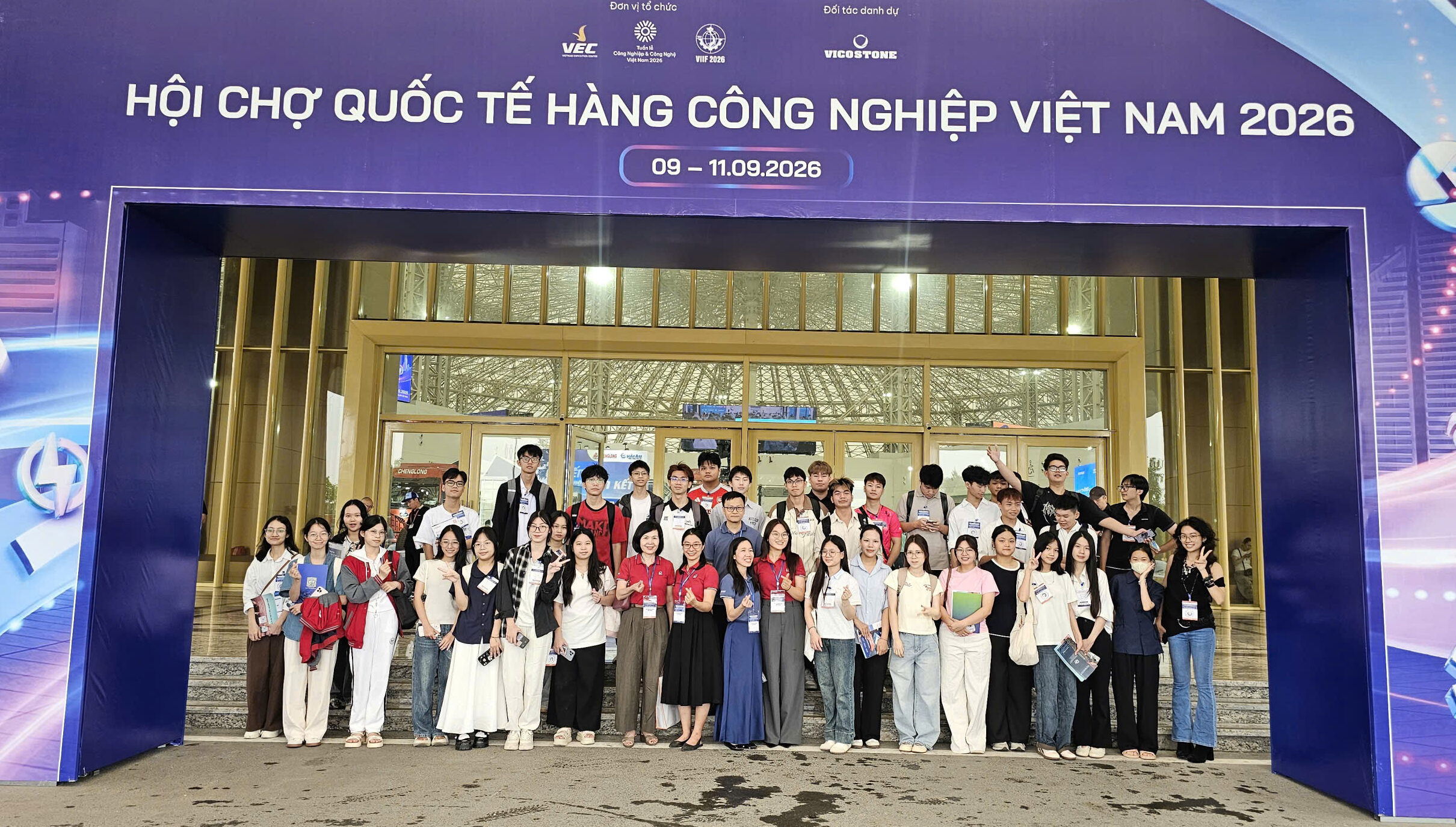 Lecturers from the Faculty of Business Administration 1 and D26 students of the Logistics in the Low-Altitude Economy program at UAV Vietnam 2026.
During the program, students visited exhibition areas featuring UAVs, robots, and other technological equipment, where they explored the design, operation, and potential applications of different types of UAVs across various fields. The delegation also attended demonstrations and presentations of smart UAV and robotic solutions at the exhibition.
One of the activities that attracted particular interest from students was a presentation by representatives of HTI UAS on UAV applications and technologies supporting positioning and navigation in environments where satellite signals are limited or unavailable. Through this session, students gained a clearer understanding that a practical UAV system involves not only the aircraft itself, but also positioning technologies, sensors, data transmission, control systems, software, and ground-based operational infrastructure.
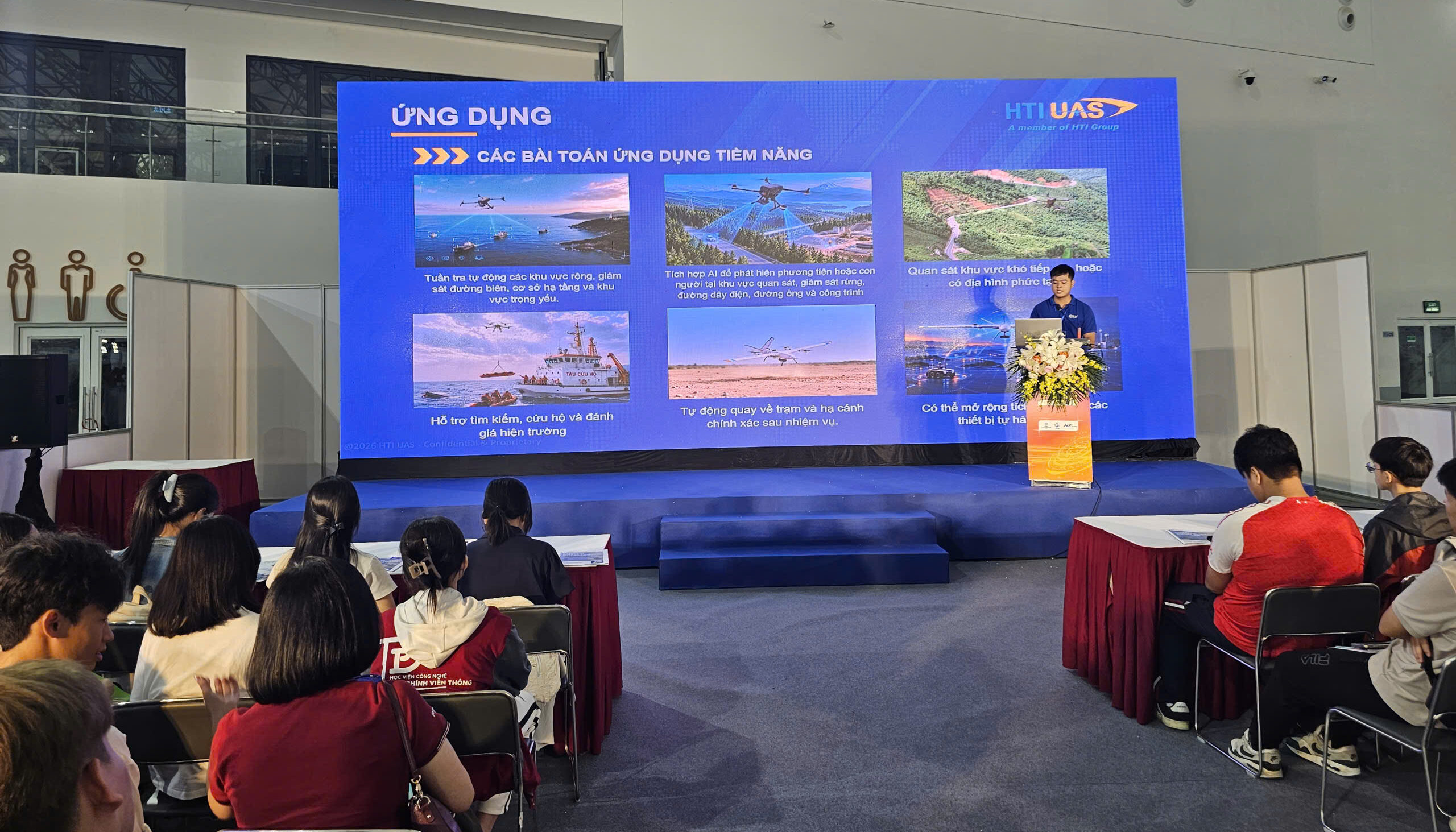 Students attend a presentation on GPS-denied landing technology.
Following the general presentations, students continued to engage directly with company representatives at exhibition booths, where they observed industrial UAVs, automated docking stations, payload systems, and specialized equipment. These activities helped transform relatively new technological concepts into tangible examples through products and systems currently being developed and deployed by enterprises.
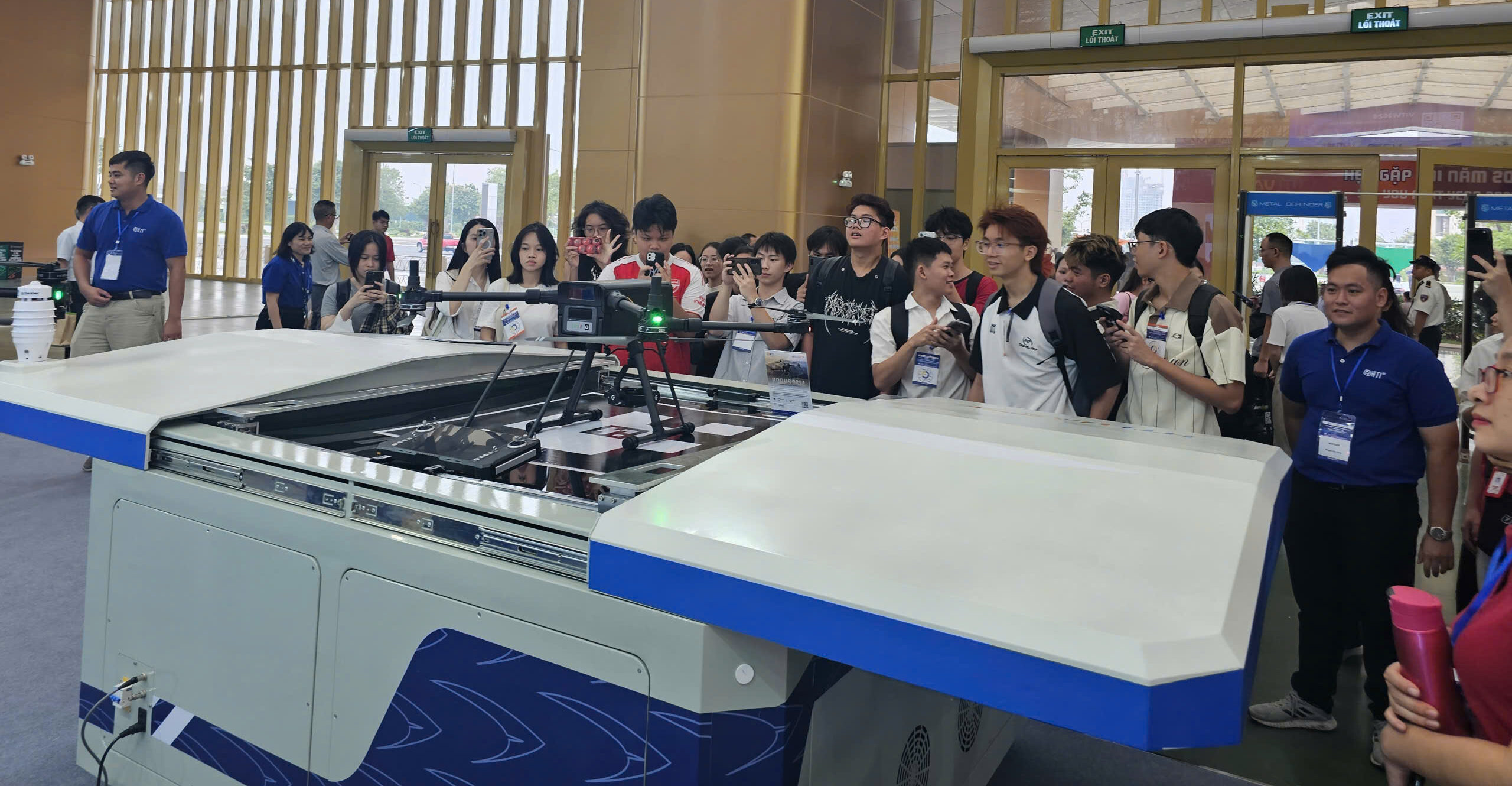 Lecturers and students exchange with company representatives about UAV solutions and automated operating systems.
A notable aspect of the field trip was that students did not explore UAVs merely as standalone aerial vehicles; they were also introduced to smart logistics models integrating ground transportation with low-altitude aerial operations.
At the booth showcasing Shanon’s solutions, the delegation learned about a platform that connects different vehicles and logistics activities within an integrated system. In this model, ground transportation vehicles, UAVs, and a digital coordination platform can work together to carry out delivery operations. The model gave students a more concrete understanding of how new logistics networks may be developed, in which goods can be transferred among consolidation points, ground vehicles, and aerial vehicles while being monitored and coordinated through a digital platform.
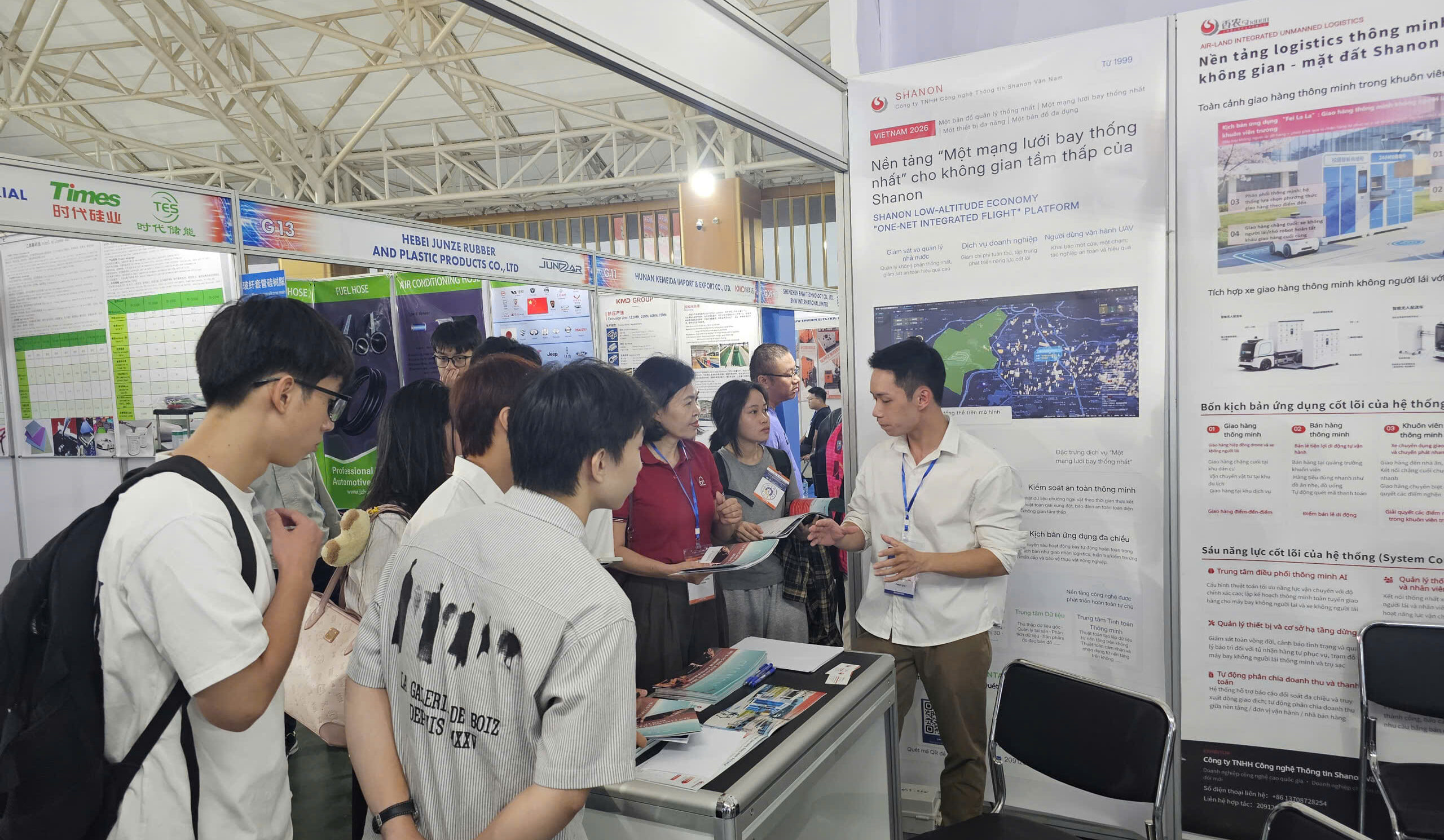 Lecturers and students explore a smart logistics platform integrating ground transportation and low-altitude aerial delivery at the exhibition.
This content is also closely aligned with the training orientation of PTIT’s Logistics in the Low-Altitude Economy program. The curriculum equips students with interdisciplinary knowledge combining business administration, logistics, and technology through courses such as Low-Altitude Economy, Logistics Information Systems, Artificial Intelligence in Logistics, UAV/Drone Technology and Operating Systems, Data Science for Logistics, Logistics Management in the Low-Altitude Economy, Transportation Management in Low-Altitude Airspace, and Special Topic: Low-Altitude Logistics Solution Design. The program also aims to develop students’ capabilities in designing and operating logistics systems that integrate ground-based and low-altitude transportation.
Through their experience at the exhibition, students were able to recognize more clearly a key feature of this emerging field: logistics in the low-altitude economy is not simply about using drones for delivery, but rather about organizing and managing an integrated system involving vehicles, infrastructure, data, operational technologies, and transportation modes across both ground and low-altitude airspace.
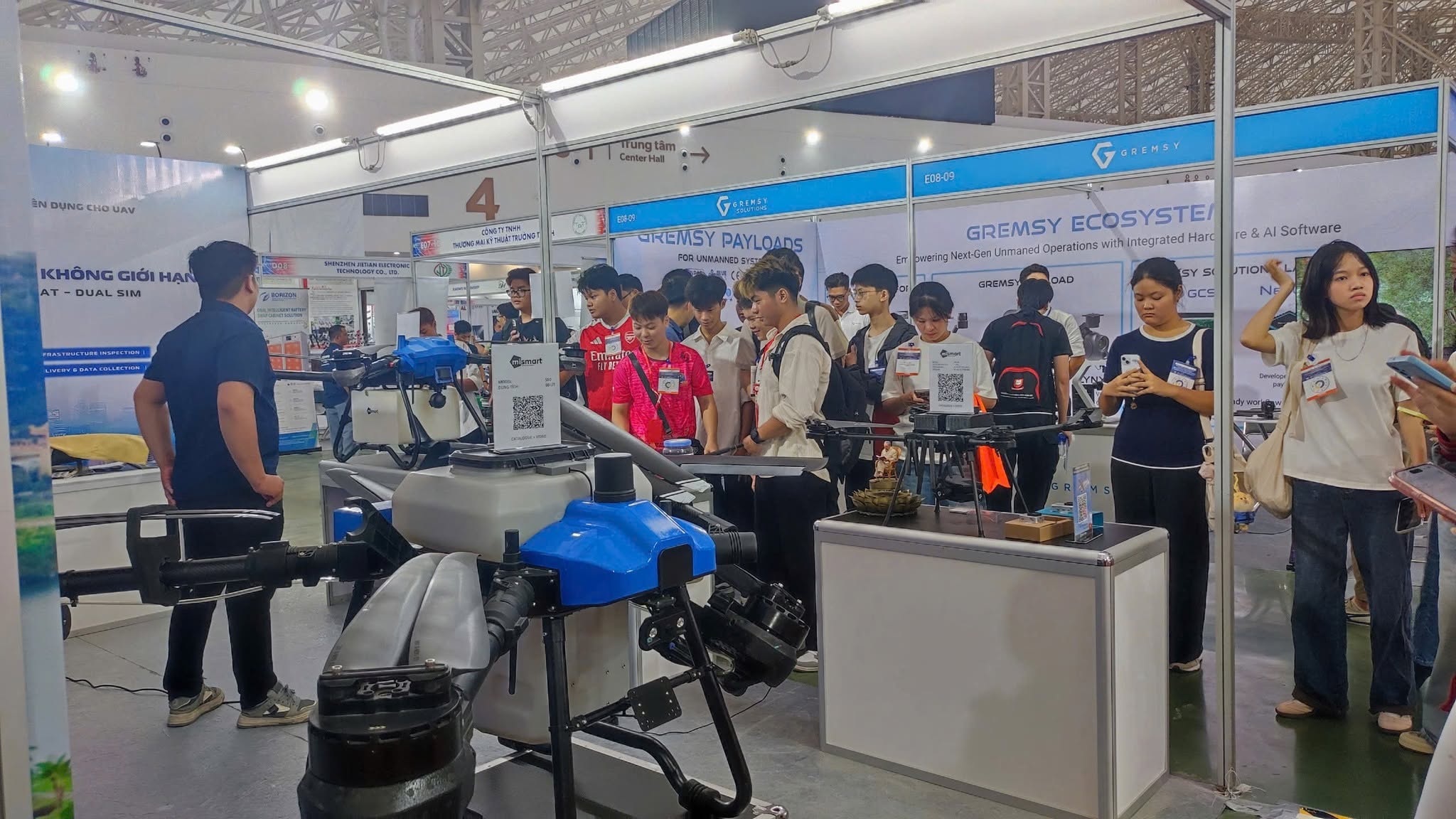 Students explore industrial UAV models and specialized equipment at the exhibition.
For D26 students – the first cohort of PTIT’s Logistics in the Low-Altitude Economy program – the field trip provided an opportunity to engage with the technology and business environment from the very beginning of their university studies. Rather than encountering new concepts only through textbooks and lectures, students were able to observe actual products, interact directly with enterprises, and connect emerging technologies with future logistics management challenges.
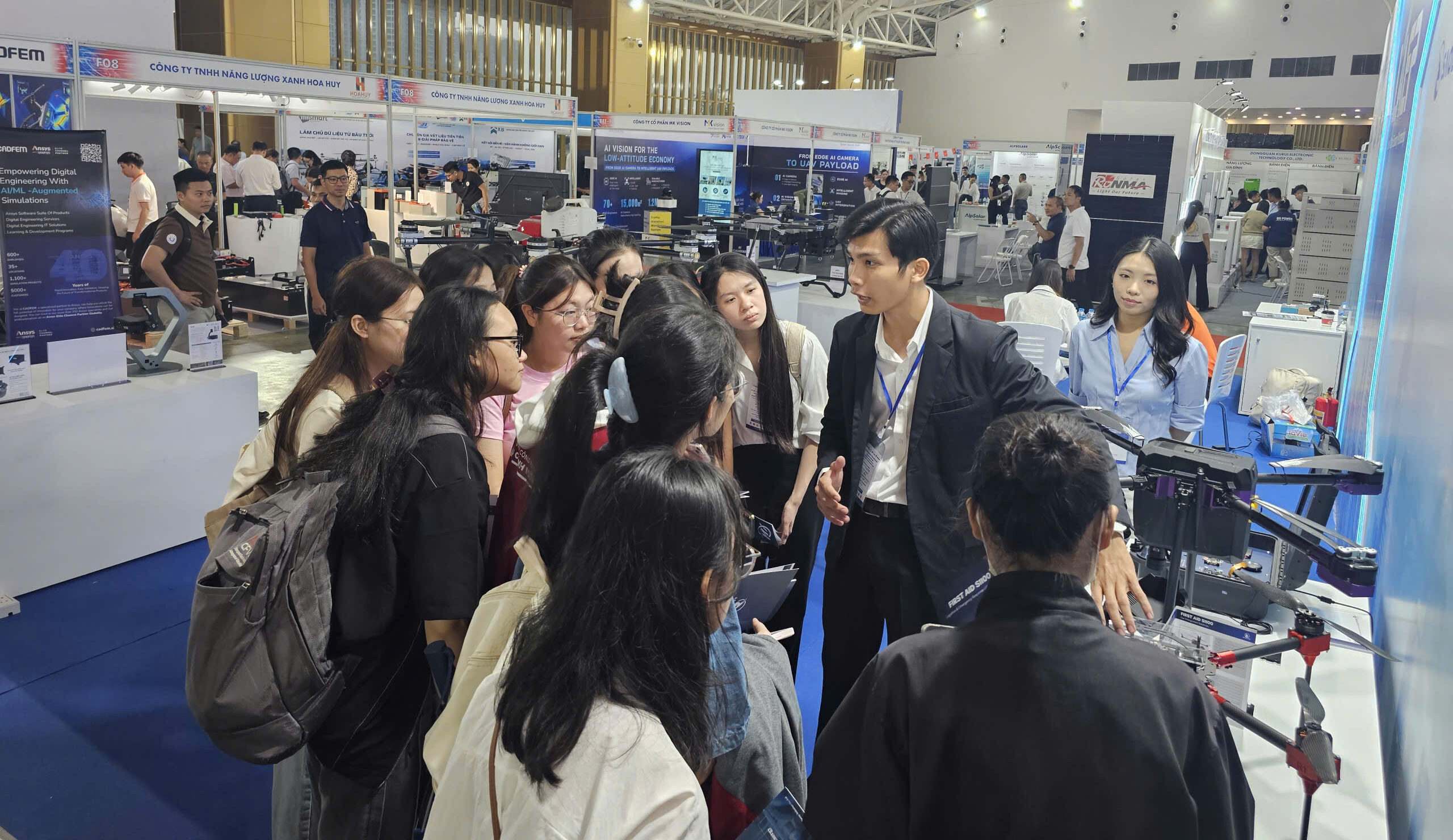
D26 students directly observe and learn about UAV systems at the exhibition.
The activity also contributed to the Faculty of Business Administration 1’s orientation toward integrating theoretical learning with practical experience, while enabling students to broaden their understanding of career opportunities, technologies, and emerging competency requirements in the logistics sector amid digital transformation and the development of the low-altitude economy.
Through enterprise and technology experience programs such as UAV Vietnam 2026, students can gradually develop an interdisciplinary mindset connecting management, logistics, and technology, thereby building the knowledge and skills needed to adapt to emerging supply chain and logistics models in the future.
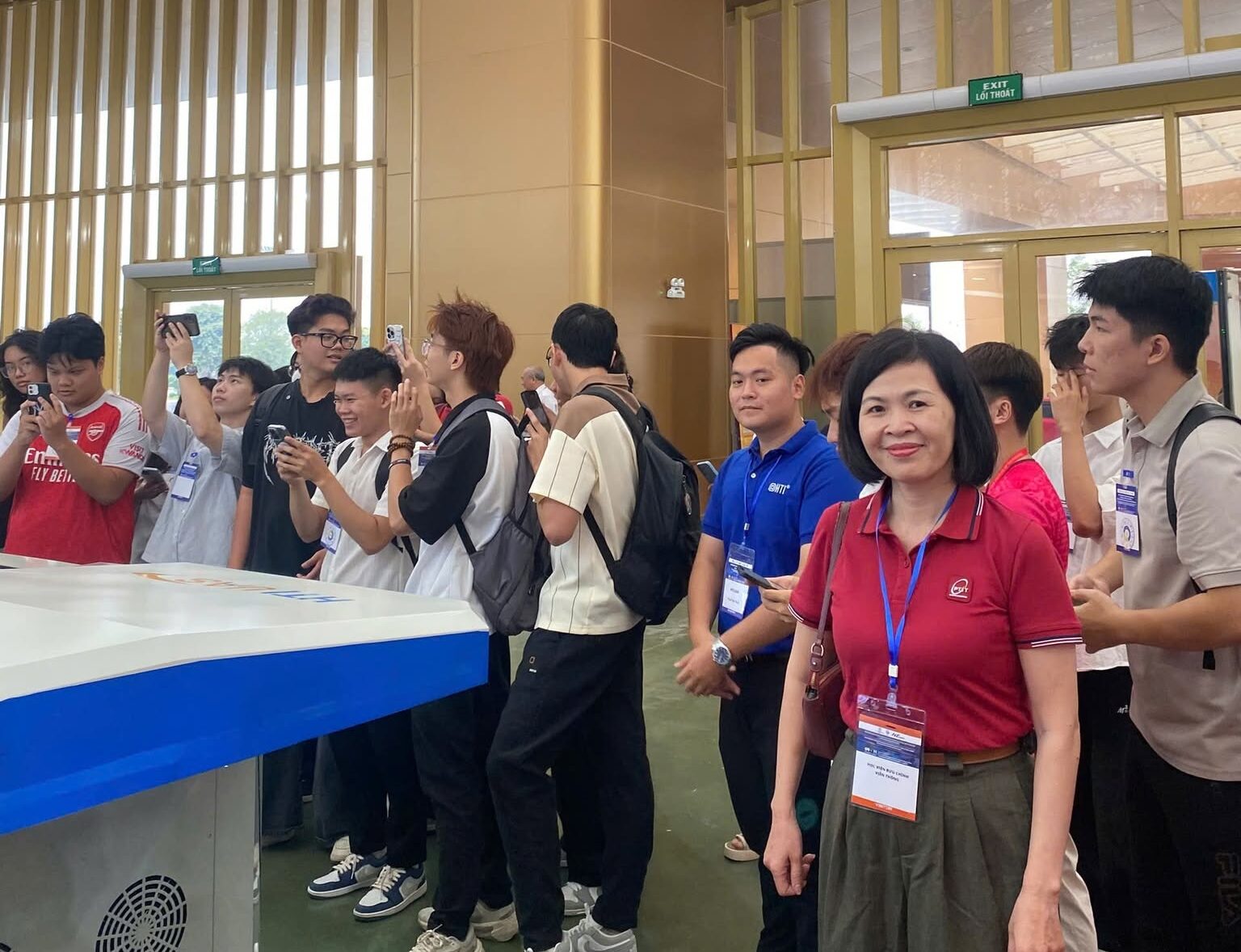 Lecturers from the Faculty of Business Administration 1 accompany students during the practical learning program at the exhibition.
The experience at UAV Vietnam 2026 helped strengthen the connection between education and practice while enabling students to expand their understanding of technologies, operational models, and emerging trends in logistics within the low-altitude economy. It also provides a foundation for students to continue connecting specialized knowledge with real-world logistics challenges throughout their studies at PTIT.