The 2025 version of the Business Administration academic program was developed based on a comprehensive review of the previous curriculum, stakeholder feedback, benchmarking, and the emerging demands of the digital business environment.
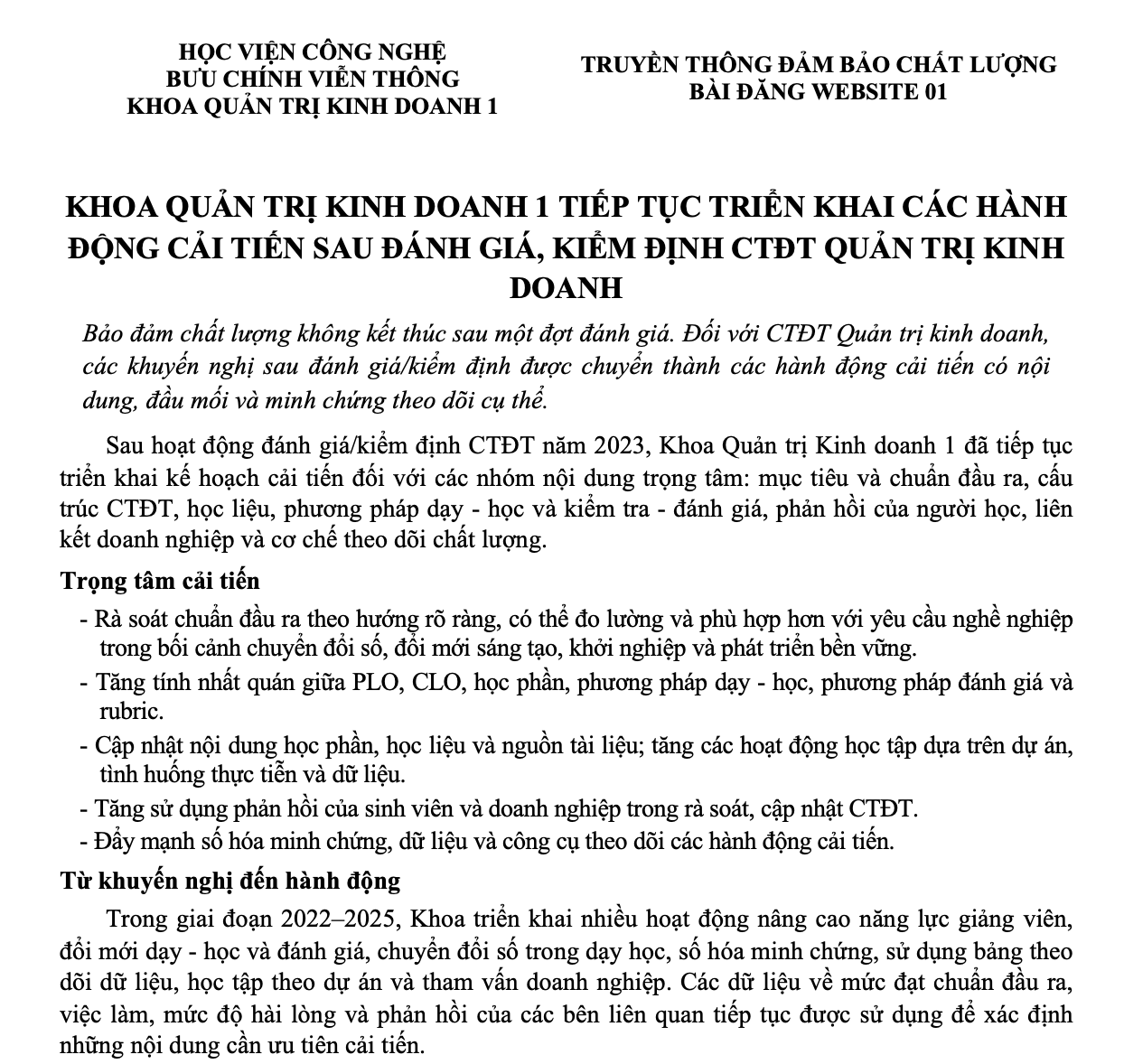
In 2025, the Faculty of Business Administration 1 conducted a comprehensive review and update of the Business Administration academic program. This process simultaneously evaluated educational objectives, program learning outcomes, curriculum structure, course content, learning resources, teaching-learning and assessment methods, as well as alignment with professional career requirements.
Highlights of the 2025 Curriculum Version
-
Duration & Credits: 4-year study duration, comprising a total workload of 132 credits.
-
Structured Objectives & Outcomes: Formatted with 4 Program Educational Objectives (PEOs) and 7 Program Learning Outcomes (PLOs), defined through specific Performance Indicators (PIs).
-
Three Specialized Majors: Business Management, International Business, and Digital Business.
-
Curriculum Mapping: 99 compulsory and elective courses mapped directly to PLOs and structured using the Intro/Reinforce/Emphasis (I/R/E) progression framework.
-
Modernized Content: Expanded coverage of AI, digital business, data analytics, information security, international business, and emerging professional skills.
How Stakeholder Feedback Was Utilized
Students proposed increasing content related to digital transformation, e-commerce, and data analysis; incorporating more case studies, real-world projects, and corporate seminars; providing clearer assessment rubrics; and introducing additional international textbooks and digital learning resources. Feedback from alumni and employers was leveraged to evaluate career relevance, practical skills, and alignment with labor market needs.
These inputs were categorized into two main groups:
-
Directly Actionable Updates: Revisions directly integrated into the official program document.
-
Ongoing Implementation Priorities: Initiatives requiring continuous execution and tracking following program issuance, such as expanding industry partnerships, enhancing experiential learning, updating course materials, and monitoring the impact of implemented changes.
Review is a Continuous Process
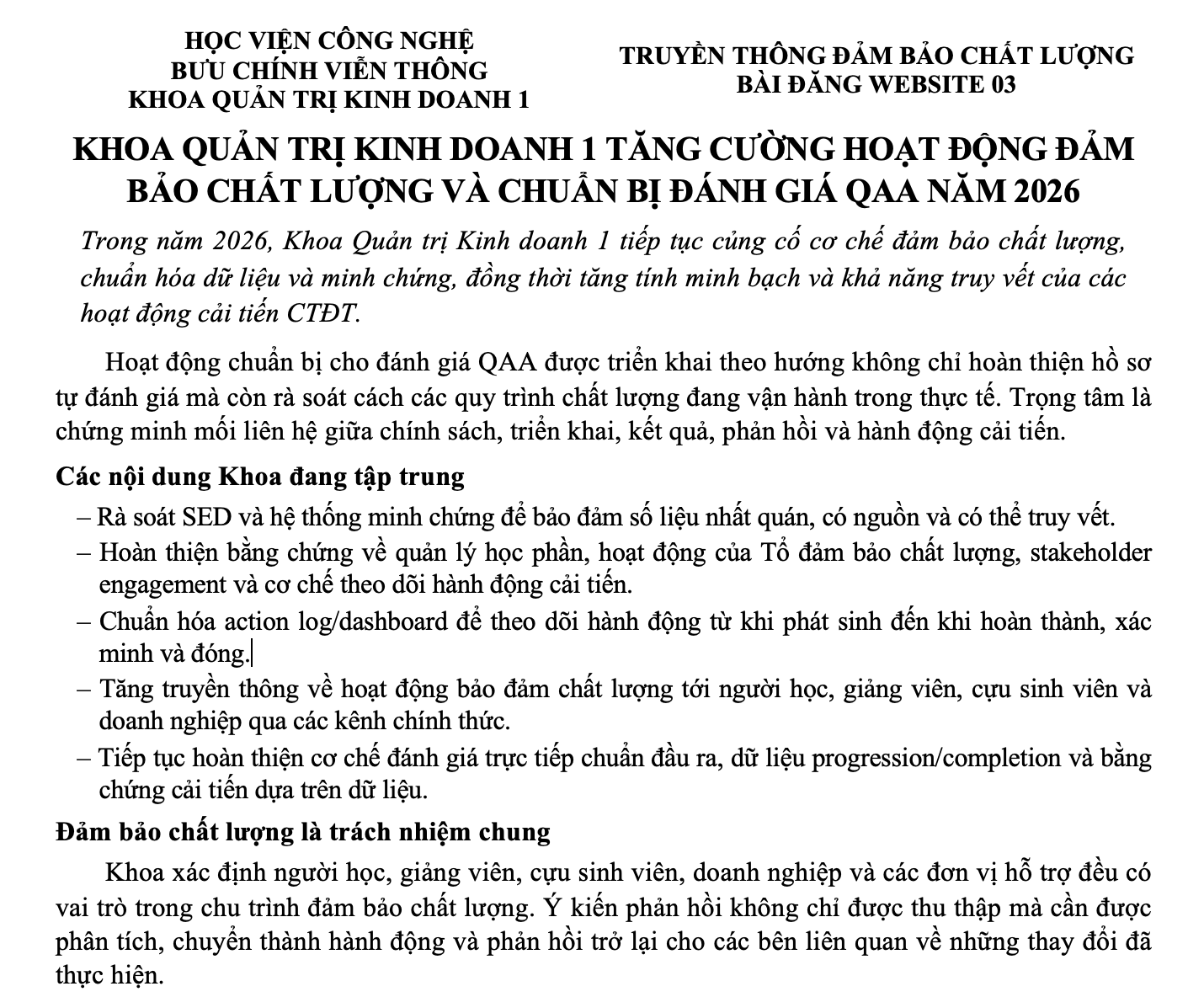
Following the rollout of the 2025 curriculum, the Faculty continues to monitor data on CLO/PLO attainment, academic progress, graduation rates, employment outcomes, and feedback from students, alumni, and employers. The monitoring results will be incorporated into annual monitoring reports and ongoing program improvement plans.
Faculty of Business Administration 1 – Posts and Telecommunications Institute of Technology