Quality assurance does not end after a single evaluation cycle. For the Business Administration academic program, recommendations following evaluation and accreditation are systematically translated into actionable quality improvement initiatives, complete with specific content, designated owners, and verifiable tracking evidence.
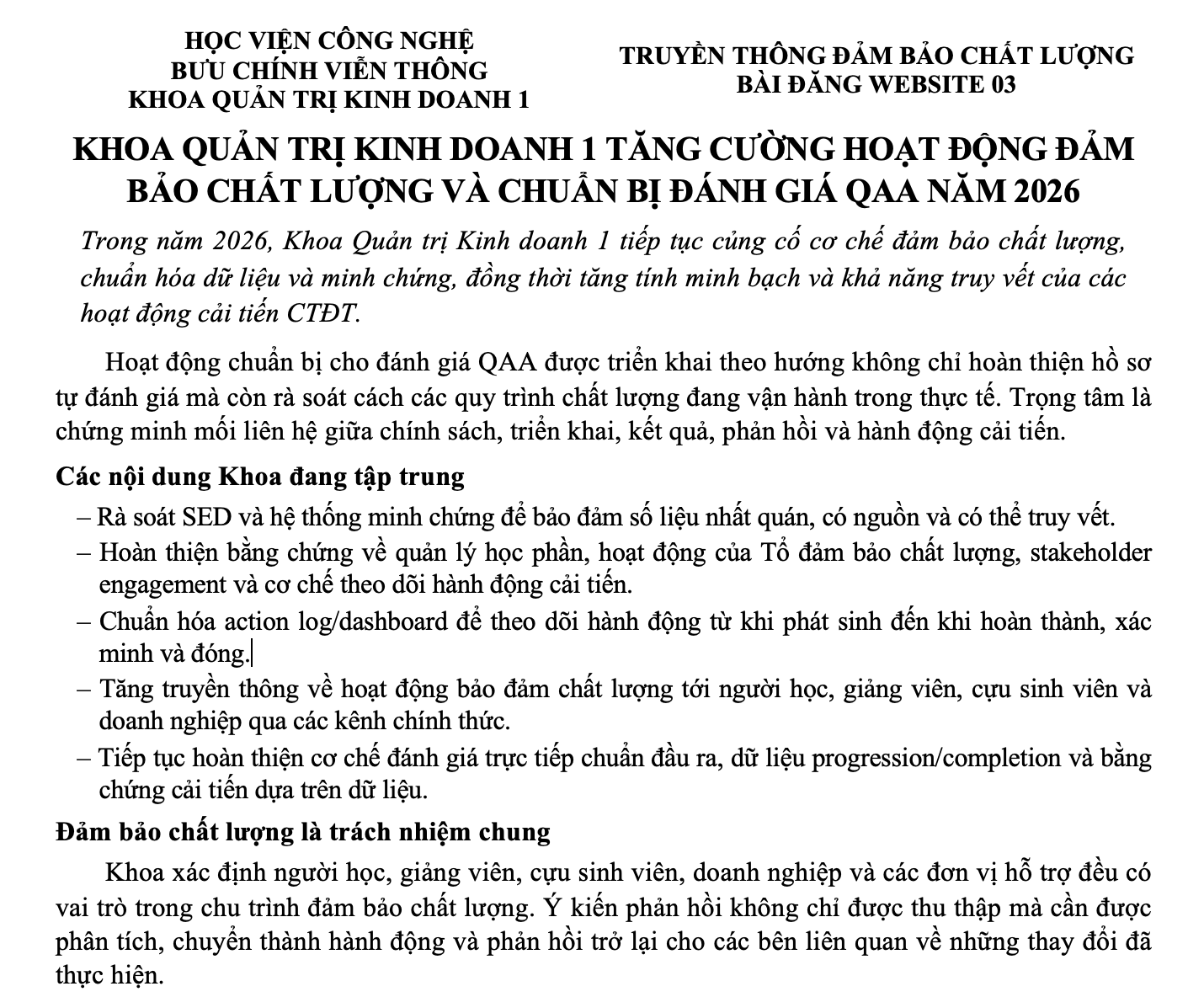
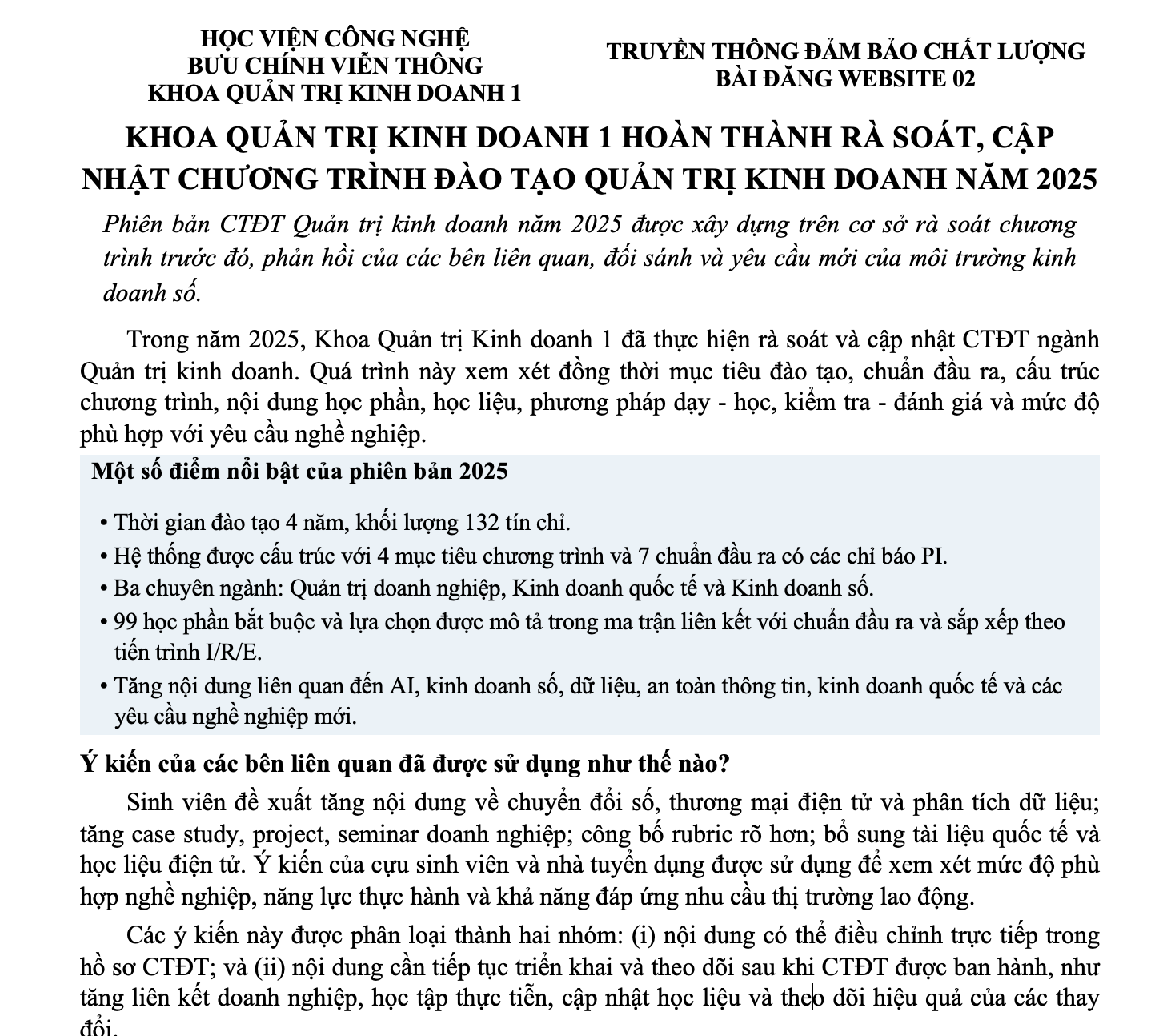
Following the 2023 academic program evaluation and accreditation, the Faculty of Business Administration 1 has continuously implemented improvement plans across core focus areas: program objectives and learning outcomes, curriculum structure, learning resources, teaching-learning and assessment methods, student feedback, industry linkage, and quality tracking mechanisms.
Key Improvement Priorities
-
Refining Program Learning Outcomes (PLOs): Ensuring PLOs are clear, measurable, and closely aligned with professional requirements in the context of digital transformation, innovation, entrepreneurship, and sustainable development.
-
Enhancing Alignment: Improving consistency among PLOs, Course Learning Outcomes (CLOs), courses, teaching-learning methods, assessment methods, and rubrics.
-
Updating Curriculum & Resources: Modernizing course content, learning materials, and reference resources, while expanding project-based, practical case-based, and data-driven learning activities.
-
Amplifying Stakeholder Feedback: Increasing the utilization of student and industry feedback in curriculum review and updates.
-
Digitalizing Quality Assurance: Accelerating the digitization of evidence, data, and tracking tools for improvement initiatives.
From Recommendations to Action
During the 2022–2025 period, the Faculty implemented numerous initiatives to enhance faculty capacity, innovate teaching and assessment methods, drive instructional digital transformation, digitize evidence, utilize data tracking dashboards, promote project-based learning, and engage in industry consultations. Data regarding learning outcome attainment, employment rates, satisfaction levels, and stakeholder feedback continue to serve as the basis for identifying priority areas for continuous improvement.
Key Messages
-
Evaluation results are translated into actionable improvement plans rather than remaining static reports.
-
Every improvement action requires a designated owner, a clear deadline, outcome evidence, and tracking status.
-
Students, faculty members, alumni, and industry partners remain vital sources of feedback throughout the continuous improvement cycle.
Continuous Feedback
The Faculty of Business Administration 1 encourages students, alumni, faculty members, and industry partners to continue sharing feedback regarding the academic program, teaching and learning activities, assessments, learning resources, and career requirements via the official channels of the Institute and the Faculty. All received information will be consolidated and reviewed during upcoming monitoring, review, and curriculum enhancement cycles